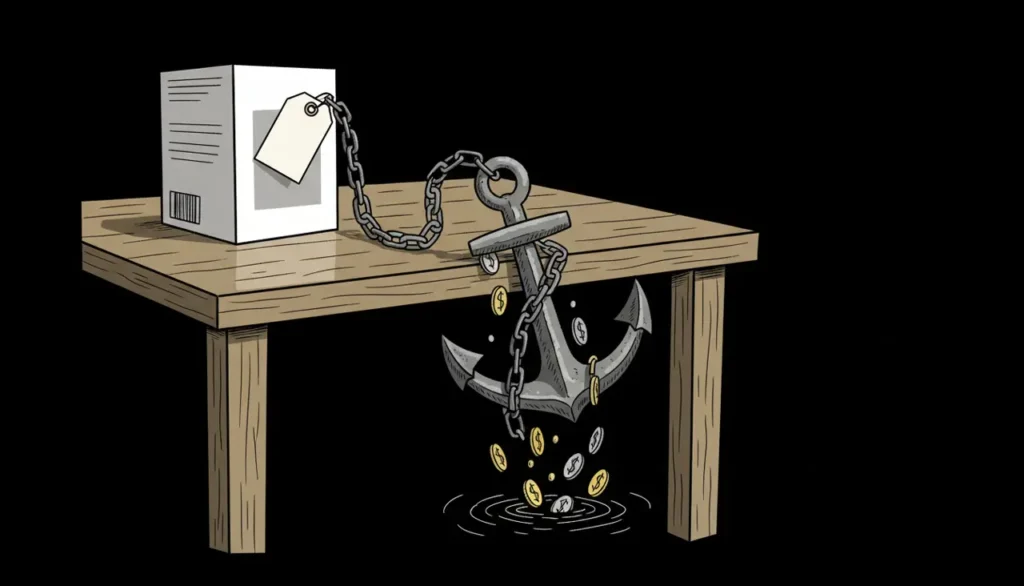
Spendable Revenue: Why Higher Sales Can Still Leave You Short
Spendable Revenue helps owners understand why a business can produce strong sales and still struggle to build cash or profit.
Sales is the headline number. But part of every sale may already be committed to materials, subcontractors, delivery costs or other expenses required to complete the work.
The remaining amount provides a more useful base for thinking about operating expenses, profit and future commitments.
Why Sales Alone Can Be Misleading
Owners often use total sales to judge whether the business is doing well.
That is understandable because sales is easy to see. It appears prominently in reports and tends to receive the most attention during growth discussions.
But two businesses with the same sales can produce very different results.
One may have high material and subcontractor costs. Another may deliver mostly through its existing team with fewer direct costs. Even though their sales are equal, the amount available to support overhead and profit may be very different.
This is why pricing should not be reviewed from sales alone.
A Simple Example
Consider a business producing $100,000 in sales during a period.
| Area | Amount | Percentage Of Sales |
|---|---|---|
| Sales | $100,000 | 100% |
| Direct delivery costs | ($45,000) | 45% |
| Amount remaining before overhead | $55,000 | 55% |
| Operating expenses | ($40,000) | 40% |
| Profit | $15,000 | 15% |
The business reports a 15% profit based on sales.
But the decision problem becomes clearer when management recognises that $45,000 was required to deliver the work before ordinary overhead could be covered.
The business is therefore not managing its rent, payroll, administration and profit from the full $100,000.
Why Pricing Can Have A Large Effect On Profit
A price increase may produce a larger percentage change in profit than it produces in sales.
That can happen when the business increases its price without causing the same increase in delivery costs or operating expenses.
However, this does not mean every business should automatically raise prices by the same amount.
The result depends on:
- Whether customer demand changes.
- Whether materials and subcontractor costs remain stable.
- Whether additional volume creates more labour or administration.
- Whether the current price already reflects the value delivered.
- Whether discounts or promotions weaken the intended increase.
The business needs to understand what will actually change rather than assuming the full increase will become profit.
Three Pricing Checks Before Making A Change
1. Which Costs Move With Each Sale?
Some costs increase whenever the business sells more.
Examples may include materials, packaging, delivery charges, payment-platform fees, sales commissions or outsourced fulfilment.
A price increase may still help, but the business should not assume these costs will remain unchanged.
Review which expenses are directly connected to each sale and which remain relatively stable for the period.
2. Will More Volume Increase Overhead?
Operating expenses may appear fixed until the business grows.
Higher sales can lead to overtime, additional software, more customer support, extra administration, refunds or additional management time.
If the business must increase capacity to support the additional work, the true improvement may be smaller than expected.
3. Is The Business Measuring What It Keeps?
A higher sales figure may look successful while profit remains unchanged.
Pricing should therefore be reviewed together with the amount left after direct delivery costs and the wider operating cost required to support the work.
The objective is not simply to produce a bigger invoice. It is to improve the financial result that remains after the work is completed.
What A 10% Price Increase Might Look Like
The following simplified example assumes the same quantity is sold and the main costs remain unchanged.
| Area | Before | After 10% Price Increase |
|---|---|---|
| Sales | $100,000 | $110,000 |
| Direct delivery costs | ($45,000) | ($45,000) |
| Operating expenses | ($40,000) | ($40,000) |
| Profit | $15,000 | $25,000 |
In this simplified situation, sales increase by 10%, while profit increases from $15,000 to $25,000.
The increase is significant because the extra revenue is not being absorbed by higher costs.
Real businesses may experience changes in volume, customer behaviour and delivery costs, so the actual outcome should be reviewed carefully.
When A Price Increase May Not Solve The Problem
Higher prices do not automatically repair weak financial control.
The benefit may disappear when:
- The business gives the increase back through discounts.
- Supplier prices rise at the same time.
- The business loses too much suitable volume.
- The work is inefficient or regularly requires rework.
- Additional sales create overtime and capacity pressure.
- The offer is unclear and customers do not understand its value.
Pricing is an important lever, but it should be reviewed together with customer fit, delivery efficiency and cost control.
Do Not Use One Margin For Every Offer
A business may sell several products or services with very different cost structures.
One offer may require substantial materials or subcontractor time. Another may rely mainly on existing internal capacity.
Applying the same pricing logic to every offer can hide which work is genuinely helping the business.
Review whether each important offer:
- Covers its direct delivery requirements.
- Contributes meaningfully towards overhead.
- Leaves an acceptable financial result.
- Can be delivered consistently.
- Attracts customers the business wants more of.
The aim is not to disclose every internal calculation publicly. It is to ensure management understands which offers deserve attention, repricing or redesign.
Volume Is Not The Same As Healthy Growth
Two businesses in the same industry can make very different choices.
One may lower prices to attract more work. The other may protect pricing, serve fewer customers and retain more from each sale.
The first business may appear larger while producing greater cash pressure and operational strain.
The second may generate lower sales but a stronger financial outcome.
Review Pricing During Monthly Money Day
Pricing does not need to be changed every month.
But during the monthly Money Day, the owner can review whether the current sales are producing a healthier Cash, Profit and Revenue position.
Useful questions include:
- Did sales increase without a similar improvement in profit?
- Did direct delivery costs rise unexpectedly?
- Is one offer producing more pressure than value?
- Are discounts weakening the intended price?
- Does one customer or service need a closer pricing review?
The purpose is to identify where pricing or delivery may need attention before another busy month passes.
The Better Pricing Question
Do not ask only, “How much can we increase the price?”
Ask, “What will this change do to the amount the business actually keeps?”
That question leads to a more useful pricing discussion because it includes delivery costs, overhead pressure and customer behaviour.
Spendable Revenue gives management a clearer base for that conversation without treating total sales as money freely available to spend.
Related: CPR Compass™ • Profit-Ready by CFOSg™ • How To Find Your Best Customers
Are Your Sales Growing Without Enough Profit?
CFOSg can help review whether your pricing, costs and Xero reporting explain what the business is actually keeping.
Book A 15-Minute Call See Xero ServicesReference: Gross profit definition.