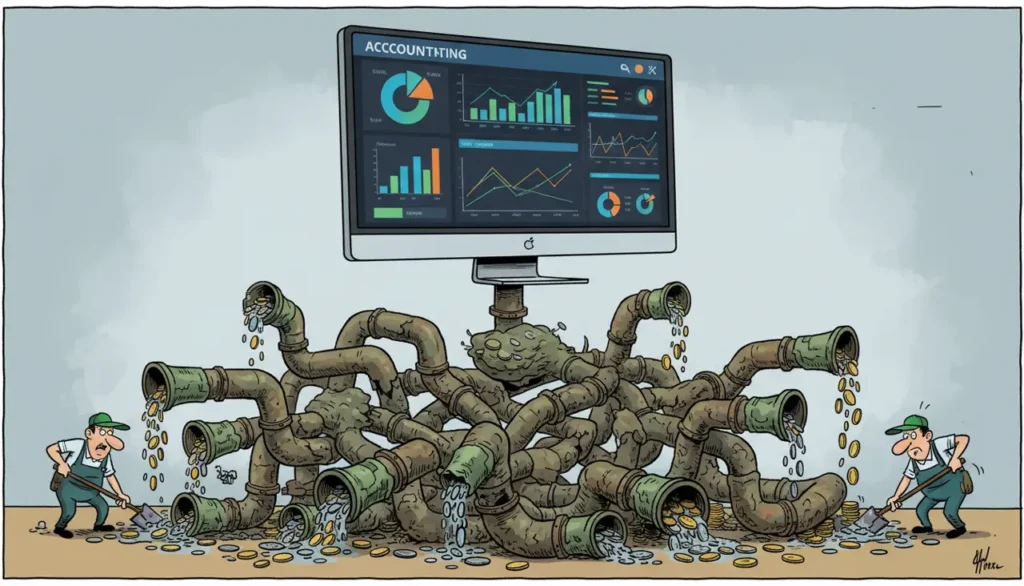
Why Cost Savings Don’t Stick For Singapore SMEs
“We already cut costs. Why is profit still not improving?”
This happens more often than owners expect.
The business cancels subscriptions, negotiates with suppliers and tells everyone to be careful.
For a while, expenses fall.
Then slowly, quietly, they return.
The Problem With “We’ll Be More Careful”
Being careful is not a system.
It works until:
- The team gets busy.
- A supplier increases its price.
- A new software tool looks useful.
- A customer asks for extra work.
- A temporary expense quietly becomes permanent.
No one makes one dramatic decision to waste money.
It usually happens through many small approvals that all sound reasonable on their own.
Why Cost Savings Disappear
Nobody Owns The Expense
The subscription or service continues, but nobody is responsible for checking whether it is still needed.
The Cause Was Never Fixed
The business cuts overtime, refunds or rework costs without fixing the process that created them.
Good Months Create New Spending
Cash improves, everyone relaxes and the savings are replaced by something else.
The Saving Was Never Checked
An action was agreed, but nobody confirmed whether the expected saving actually appeared.
Cutting Costs Is Not The Same As Fixing Costs
Suppose you cancel one software subscription.
That may save money.
But the bigger question is:
Why did the business keep paying for something nobody used?
Was there no owner?
Was the renewal automatic?
Did two departments buy similar tools?
If the approval behaviour stays the same, the next unnecessary subscription will simply have a different logo.
The Most Common Repeat Leaks
Subscriptions And Tools
Unused licences, duplicated software and plans that are much larger than the business needs.
Supplier Creep
Prices, freight or minimum orders rise while selling prices remain politely frozen.
Rework Hidden Inside Payroll
The same job is done twice, but the cost disappears inside salaries and overtime.
Extra Work Nobody Charges For
The customer asks for “one small thing” until the small things have their own department.
Urgent Buying
Poor planning leads to last-minute purchases at worse prices.
Temporary Costs That Never Leave
An expense added for a busy month becomes a permanent resident.
Do Not Cut The Parts That Make Money
This is where many cost-cutting exercises go wrong.
The business cuts what is easy to see:
- Training.
- Maintenance.
- Marketing.
- Customer support.
- Useful systems.
Meanwhile, rework, poor buying and uncontrolled scope continue untouched.
Now the expense report looks better, but customers and staff feel worse.
What To Review Instead
For each significant or rising expense, ask:
- What result is this meant to produce?
- Is anyone responsible for it?
- Has the price or usage changed?
- Is another tool or supplier doing the same job?
- Would removing it affect customers, delivery or revenue?
- Can the process be improved instead of simply cut?
That is a better conversation than:
“Which expense looks easiest to cancel?”
Cost Savings Need Follow-Through
Cost optimisation is not one dramatic clean-up.
It is a management habit.
A practical review should show:
- What changed.
- Why it changed.
- Who is responsible.
- What action was agreed.
- Whether the result appeared later.
Without follow-through, “we saved money” becomes another meeting sentence nobody checks.
Use Monthly Money Day To Watch Cost Creep
Monthly Money Day gives the owner a regular time to step back and review the pattern.
Useful questions include:
- Which costs increased?
- Was the increase planned?
- Did revenue or workload explain it?
- Did supplier pricing change?
- Was there unusual rework or overtime?
- Did the saving agreed last month actually happen?
- Which issue deserves attention now?
Operational problems can be handled during the month.
Money Day is where the owner checks whether the business is quietly returning to its old habits.
How Xero Can Help
Xero can help show where expenses moved.
Useful areas may include:
- Profit and loss comparisons.
- Supplier bills.
- Recurring expense accounts.
- Bank transactions.
- Tracking reports where suitable.
- Comparisons with prior periods or budgets.
But Xero may only show that a cost increased.
The operational cause may sit outside the accounting system:
- More staff time.
- Wastage.
- Poor handover.
- Customer revisions.
- Urgent purchasing.
The report points to the smoke.
Someone still needs to find the fire.
Review Cost Together With Cash, Profit And Revenue
A cost should not be judged by size alone.
Cash
Is this expense creating immediate payment pressure?
Profit
Is it reducing margin without producing enough value?
Revenue
Does it support suitable sales, customers or delivery?
Decision
Should it be kept, changed, renegotiated or removed?
This is why CFOSg reviews Cash, Profit and Revenue together through the CPR Compass™.
A large expense may be useful.
A small one may be complete nonsense.
The amount alone does not tell you.
Common Mistakes
- Cutting expenses without understanding the cause.
- Focusing only on small visible costs.
- Ignoring wasted staff time.
- Cutting useful spending while leaving rework untouched.
- Failing to assign responsibility.
- Assuming the saving happened without checking.
- Allowing costs to return during the next strong month.
- Treating cost optimisation as a yearly clean-up.
Common Questions
Why do costs return after we cut them?
Should we focus on the largest expenses first?
How do we avoid cutting the wrong thing?
Is cost optimisation just a finance job?
Can Xero stop cost creep?
How often should costs be reviewed?
The Takeaway
If your cost plan is:
“Everyone should be more careful.”
The savings will probably disappear.
Cost savings stick when the business:
- Understands what created the cost.
- Changes the behaviour or process.
- Assigns responsibility.
- Checks whether the saving appeared.
- Protects useful spending.
- Keeps watching for the same leak in a different form.
Related: Cost Optimisation For SMEs • Margin Improvement For SMEs • Financial Management For SMEs • CPR Compass™
Did Your Cost Savings Quietly Disappear?
CFOSg can help review your Xero records and operating costs so you can find repeated leaks without cutting the parts of the business that support customers and growth.
Book A 15-Minute Call See Xero Services