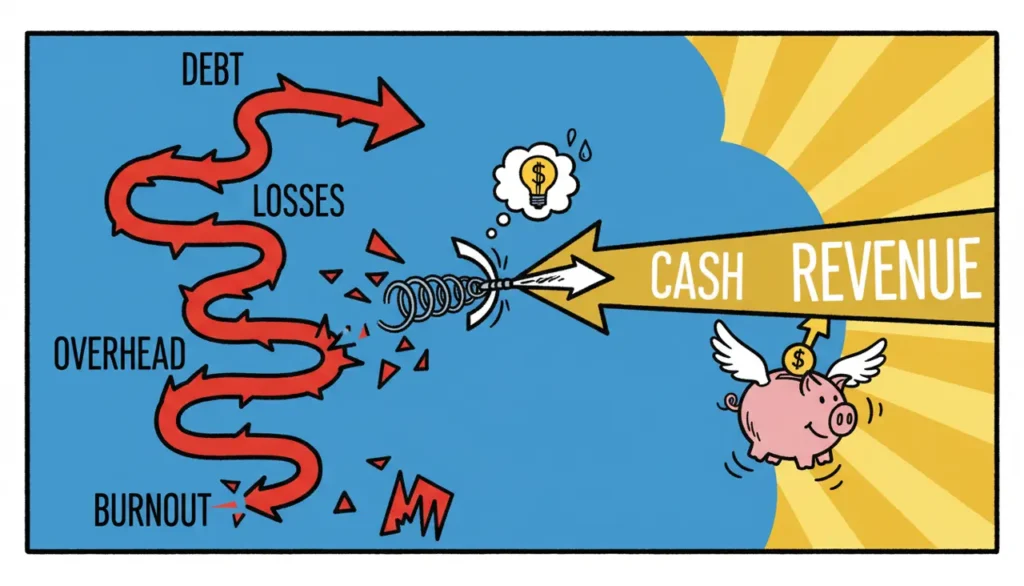
Xero Advisory Singapore: Turn Reports Into Better Decisions
Xero advisory in Singapore should help an SME owner understand what the numbers mean and what business decision should come next.
Bookkeeping records transactions. Reports organise the results. Advisory connects those reports with real questions about cash, profit, pricing, spending and growth.
What Xero Advisory Should Deliver
Useful advisory does not begin with another dashboard.
It begins with a business question.
For example:
- Why is cash tight despite higher sales?
- Why did profit fall even though revenue increased?
- Can the business afford another employee?
- Should prices be increased?
- Which customer or service is creating the most pressure?
- Can the company safely make a major purchase?
A useful advisory review should help identify:
- The main financial issue.
- The important drivers behind it.
- The decision management needs to make.
- The practical action to take next.
- What should be reviewed during the next monthly check.
Bookkeeping And Advisory Solve Different Problems
Bookkeeping is the foundation. It helps ensure that transactions are recorded, bank accounts are reconciled and reports are reliable enough to review.
Advisory uses that information to support decisions.
Bookkeeping
- Records transactions.
- Maintains invoices and bills.
- Reconciles bank accounts.
- Supports financial reporting.
- Maintains supporting records.
Accounting Support
- Reviews account balances.
- Supports GST where applicable.
- Prepares financial reports.
- Handles period-end adjustments.
- Supports compliance work.
Advisory
- Explains financial movements.
- Identifies business pressure.
- Compares options.
- Supports planning.
- Prioritises action.
Advisory cannot produce a reliable answer when the records are incomplete or inconsistent.
In some businesses, the first advisory recommendation may therefore be to correct the financial foundation before making a major decision.
The Three Areas Owners Usually Need Help With
Cash
Cash pressure is often caused by timing rather than a complete lack of sales.
The business may have:
- Customers paying later than expected.
- Supplier payments falling due earlier.
- Stock or project costs paid before collection.
- Tax, payroll or loan commitments approaching.
- Cash tied up in slow-moving work or inventory.
Advisory can help management understand where cash is delayed, committed or being consumed.
Profit
Profit pressure may be hidden by healthy-looking revenue.
Possible causes include:
- Higher direct delivery costs.
- Discounting.
- Unprofitable services.
- Growing payroll or overhead.
- Pricing that no longer reflects the work involved.
The purpose is not simply to cut expenses. It is to identify which financial movement is weakening the result and what management can realistically change.
Revenue
Revenue pressure is not always solved by chasing more leads.
The business may need to review:
- Which customers are most valuable.
- Which products or services deserve more attention.
- Whether proposals are converting.
- Whether prices support delivery costs.
- Whether sales are recurring or unpredictable.
The aim is not revenue at any cost. It is revenue that contributes to a stronger business.
What “Fix First” Should Mean
A business can have several problems at the same time.
Cash may be tight, margins may be falling and sales may feel uncertain.
Trying to solve everything at once often leads to more reports, more meetings and very little action.
A useful advisory process helps the owner choose a practical priority based on:
- The financial effect.
- The urgency.
- The information available.
- What management can influence.
- The wider effect on the business.
When Xero Advisory Is Useful
Advisory may be useful when:
- The reports are reliable but the next decision remains unclear.
- Sales are growing but profit is not.
- Reported profit and available cash tell different stories.
- The owner is considering hiring or investing.
- Costs have increased without a clear explanation.
- The business needs a cash-flow forecast.
- Management wants to compare different scenarios.
- The owner receives reports but rarely acts on them.
It can also be useful before a major decision rather than only after a problem appears.
What A Monthly Advisory Review May Cover
The exact scope depends on the business and the service agreed.
A monthly review may include:
- Bank and cash position.
- Overdue customer invoices.
- Upcoming supplier, payroll and tax commitments.
- Revenue and gross-profit movements.
- Major operating expense changes.
- Actual performance against a plan or forecast.
- A current hiring, pricing or investment decision.
- The most important action before the next review.
The owner should leave the review knowing what requires attention, who is responsible and when the result will be checked.
Monthly Money Day
Operational accounting work should happen throughout the month.
This includes invoicing, entering bills, following up collections and reconciling transactions.
Monthly Money Day gives the owner a separate time to review the wider business position.
Useful questions include:
- Are the records reliable enough to use?
- Did cash improve or weaken?
- Did profit move in line with sales?
- Which cost or revenue movement requires explanation?
- What decision cannot be delayed?
- What is the one action management should take next?
Money Day should not become another accounting meeting filled with unexplained reports.
Its purpose is to help the owner move from numbers to action.
What Good Advisory Should Not Be
Advisory should not be:
- A long presentation with no conclusion.
- A dashboard nobody uses.
- A list of every possible problem.
- Generic advice that could apply to any business.
- A recommendation based on incomplete records.
- A promise that one formula will solve every situation.
It should reflect the company’s numbers, business model, cash position and actual decision.
What To Ask A Xero Adviser
Before accepting an advisory proposal, ask:
- What information must be ready before the review?
- Who is responsible for maintaining the Xero records?
- Which reports will be reviewed?
- Will forecasts or scenario comparisons be included?
- How often will reviews take place?
- What action plan or follow-up will be provided?
- Which work is excluded?
- How will progress be assessed?
Some advisers provide decision support but not bookkeeping. Others combine both.
The important point is that responsibilities are clear and the financial records are ready when advice is needed.
Xero Advisory Singapore FAQ
Is Xero advisory the same as bookkeeping?
Do I need advisory every month?
Do I need weekly advisory meetings?
What should I receive from an advisory review?
How do I know whether advisory is helping?
Can advisory work if my Xero file is behind?
The Xero Advisory Singapore Takeaway
Good advisory does not simply repeat what the profit and loss report already says.
It should help the owner understand:
- What changed.
- Why it matters.
- Which decision is required.
- What action should happen next.
- When the result should be reviewed.
The software records what happened.
The adviser helps connect those records with a better business decision.
Related: Xero Accountant Singapore • Xero Support Singapore • Cash Flow Management Singapore • Profit-Ready by CFOSg™
Do Your Reports Explain What To Fix Next?
CFOSg combines reliable Xero reporting with practical financial guidance for Singapore SME owners.
Book A 15-Minute Call See Xero Services