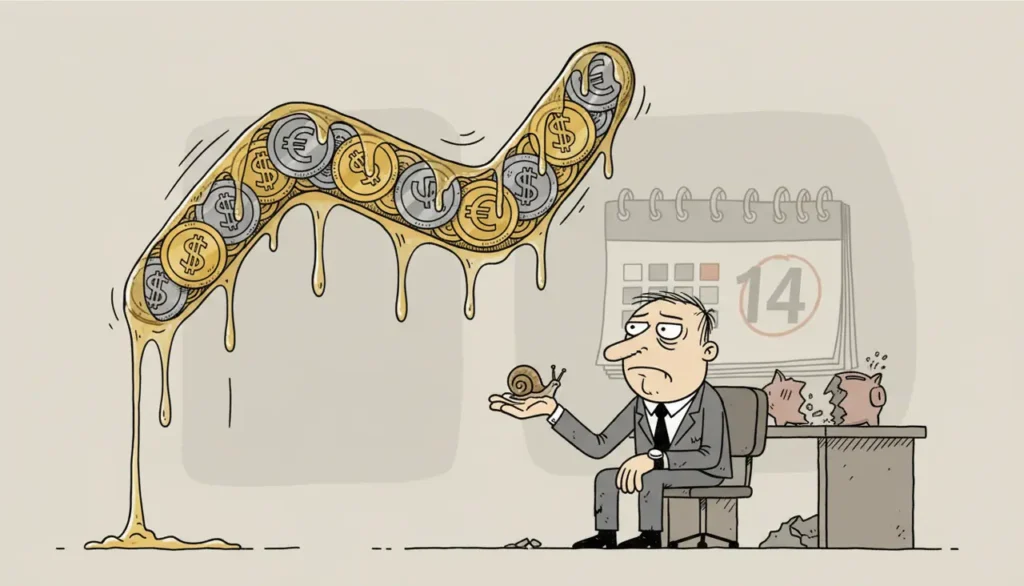
More sales can save a business. That part is true.
But if you have a profit leak, more sales can also make your life worse.
More sales automatically means more profit.
Reality:
More sales with weak margins can mean more work, more stress, and the same cash pain.
This is the revenue-first trap.
You feel pressure. The team says, “We need more sales.” Everyone runs faster.
Three months later you say:
“We had one of our biggest months… so why does it still feel like a crazy week every week?”
Because revenue grew. Profit discipline did not.
What a profit leak looks like in real life
A profit leak is not always one dramatic mistake.
Usually it comes from many small decisions:
- discounting to close deals faster
- taking low-margin work to keep the team busy
- absorbing cost increases instead of repricing
- subscriptions and tools that never got reviewed
- owner spending based on a good sales week
- operating costs that keep growing without review
None of these feels fatal on its own.
Together, they quietly reduce what the business keeps.
Why “more sales” feels like the answer
Because sales creates visible movement.
It feels productive. It sounds ambitious. It gives immediate emotional relief.
You can rally the team around it.
What does not feel exciting?
- margin review
- pricing discipline
- cost cleanup
- clear spending limits
- regular profit review
But those are often the actual profit fixes.
Example: the discount trap
Owner says, “Let’s run a promo. We need cash.”
Sales jump. Team feels good. Dashboard looks alive.
Then:
- margin drops
- workload rises
- service pressure increases
- cash gets stretched by delivery cost
- customers wait for the next discount
So now you need even more sales to create the same profit.
That is activity without enough return.
Example: low-margin volume
This one hurts because it looks like success.
The owner says, “At least we are busy.”
Yes — but busy doing what?
If your capacity is full of low-margin work, you are using your best hours to produce very little return.
The team is tired. The owner is tired. The bank still feels tight.
Busy is not the same as healthy.
How to tell if your “sales problem” is really a profit leak
Ask these questions:
- Did sales go up, but the bank stress stayed the same?
- Are you relying on discounts to hit targets?
- Do you know which jobs or products have the best margin?
- Has Opex crept up as fast as revenue?
- Do you protect profit on purpose, or only hope there is something left?
If several answers feel uncomfortable, the real issue may be weak margins rather than insufficient sales.
What to do instead
Before pushing for more sales, check whether the real pressure comes from cash timing, weak margins or an actual revenue gap.
Then choose the next move based on the issue that needs attention first.
Revenue still matters. It simply should not become the automatic answer to every money problem.
What owners usually say after fixing the leak first
- “We didn’t need as much extra sales as I thought.”
- “The pressure dropped once we stopped discounting everything.”
- “I finally know what we should sell more of.”
- “It feels calmer now, not just busier.”
That is the goal.
Not random growth. Better growth.
FAQ
Does more sales usually fix a profit problem?
Not always. If your pricing is weak, your margins are thin, or your spending is loose, more sales can increase workload without improving what you keep.
How do I know if I have a profit leak?
Look for signs like rising sales with no relief in cash pressure, constant discounting, unclear margins, bloated Opex, or never knowing what is truly left over.
Should I check profit before trying to grow revenue?
Yes. Check whether pricing, margins or operating costs are already weakening what the business keeps. More volume may increase pressure when the underlying economics are weak.
What is the difference between a revenue problem and a profit problem?
A revenue problem means not enough money is coming in. A profit problem means money is coming in, but too little is left after pricing, costs, discounts, and spending decisions.
How does the CPR Compass help with this?
The CPR Compass helps you check whether Cash, Profit or Revenue needs attention first, so you can choose a more suitable next step.
Related reads
More sales can hide a profit leak for a while.
It does not fix it.
Fix the leak first, then grow what actually pays.
Questions owners ask after reading this
What does fixing the wrong problem first look like?
It may mean pushing for more sales when cash timing is the real issue, cutting random costs when margins are weak, or changing tools before checking whether the current numbers support better decisions.
Why do owners often choose the wrong fix first?
Pressure makes quick relief feel like the smartest move. A simple check can help the owner pause, identify the main pressure and avoid reacting to the loudest symptom.
How can I tell whether my issue is Cash, Profit or Revenue?
Start by checking where the pressure shows up most clearly: delayed cash, weak margins or insufficient sales. The CPR Compass helps identify the area needing attention first.
Can more sales still be the wrong first move?
Yes. More sales can increase pressure when collections are slow, margins are weak or delivery costs rise before customers pay. Revenue matters, but it may not be the first issue to fix.
What should I do if I think I am fixing symptoms?
Use a quick check to identify the main pressure before choosing the next move. Avoid jumping straight to more sales, random cost-cutting or a new tool.
Related reads
- Cash Problem vs Profit Problem vs Revenue ProblemUse this to identify the real issue before choosing a fix.
- CPR CompassCheck whether Cash, Profit or Revenue needs attention first.
- Why Revenue First BackfiresSee why more sales may not solve the real problem.
- Why Your Bank Balance Feels WrongSee why the bank balance alone may lead to the wrong decision.