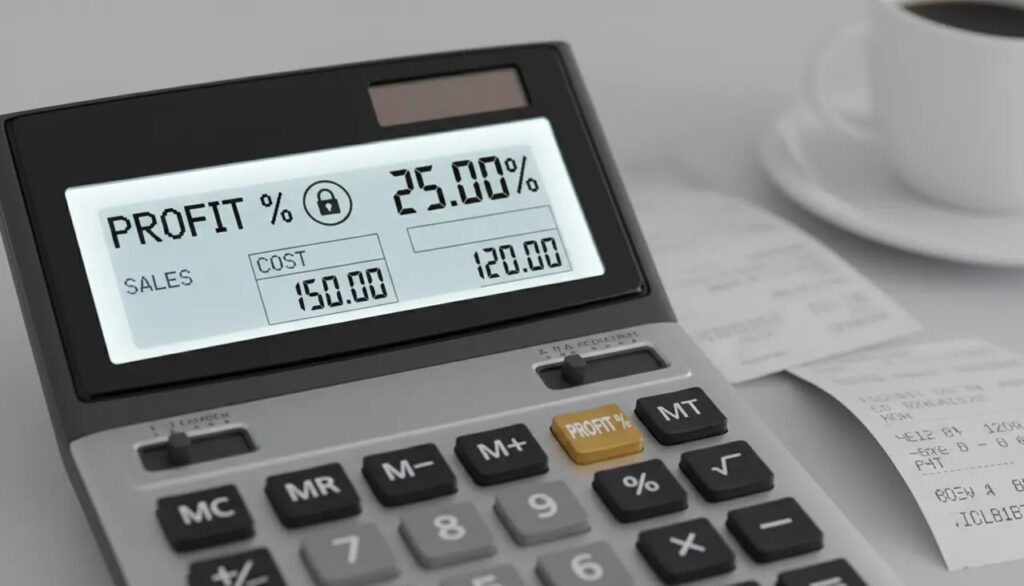
A $100,000 revenue goal sounds good — but it may be the wrong target.
If hitting that number leaves you exhausted, short of cash and with little profit, what exactly did the extra revenue achieve?
The question is not: “How much revenue do you want?”
The better question is: “How much revenue does the business need to produce the profit, cash and outcome you actually want?”
Your revenue goal may be working against you
Many businesses choose a sales number first and then try to make everything else fit around it.
But higher sales do not automatically create a stronger business.
Revenue can rise while:
- margins get thinner
- costs rise even faster
- cash gets trapped in unpaid invoices
- the team becomes overloaded
- very little profit is left to keep
Revenue is not the goal. What the business gets to keep and use matters more.
A useful revenue goal should reflect profit, cash needs, pricing and capacity — not ambition alone.
Start with the result, not the sales number
Define what the business needs each month
Start with the costs, commitments and financial needs the business must support each month.
That gives you a more realistic base before deciding what sales level the business should aim for.
Decide what profit you want to keep
Profit should be planned, not treated as whatever happens to remain after everything else is paid.
If the revenue target covers activity but produces little worthwhile profit, it is not a very useful target.
Work back to the revenue required
Once the desired result is clearer, estimate the level of sales needed to support the business and the profit outcome you want.
Check whether pricing and capacity can support it
A target is not useful if your margins, team or systems cannot realistically support the required volume.
If the number looks too high, the answer may be better pricing, stronger margins or a more focused offer — not simply more sales.
Connect the target to sales activity
Once the revenue goal makes sense financially, you can connect it to the customers, opportunities and sales activity required to support it.
More sales can make the problem worse
If margins are weak or delivery is inefficient, chasing more volume can simply create more work without producing much more profit.
You may even grow revenue while putting more pressure on cash, people and operations.
Before deciding you need more sales, ask:
- Should we improve pricing first?
- Are we selling the right products or services?
- Are our margins strong enough?
- Can the team handle more work?
- Are customers paying quickly enough?
Sometimes the answer is not more revenue.
It may be better pricing, better margins or making more from the revenue you already have.
Can your revenue goal survive reality?
A useful target should help you make decisions, not simply give the team a bigger number to chase.
It should help you answer:
- Is our current sales level enough?
- Are we producing enough profit?
- Should we improve margin before increasing volume?
- Do we have enough capacity to grow?
- What needs to change next?
That is the difference between a revenue goal that sounds impressive and one that actually supports a stronger business.
Profit-Ready™ thinking
Cash, profit and revenue should not be planned separately.
The aim is to understand what the business needs to generate, what it can safely support and what needs attention next.
Instead of starting with an arbitrary sales number, start with the result you want the business to produce and work backwards from there.
Frequently asked questions
Why do many revenue goals fail?
Because they are often based on ambition rather than what the business actually needs and can deliver profitably.
Should profit be included in a revenue goal?
Yes. Otherwise the target may generate plenty of activity but still leave very little worth keeping.
What if the revenue target looks unrealistic?
Look at pricing, margins, your offer, team capacity and systems before simply pushing for more sales.
Does this connect to sales and marketing planning?
Yes. Once the target is clear, you can work backwards to the sales activity needed to support it.
Are you chasing revenue — or building the result you actually want?
See how the Profit-Ready™ Method connects cash, profit and revenue to better business decisions.
See the Profit-Ready™ Method