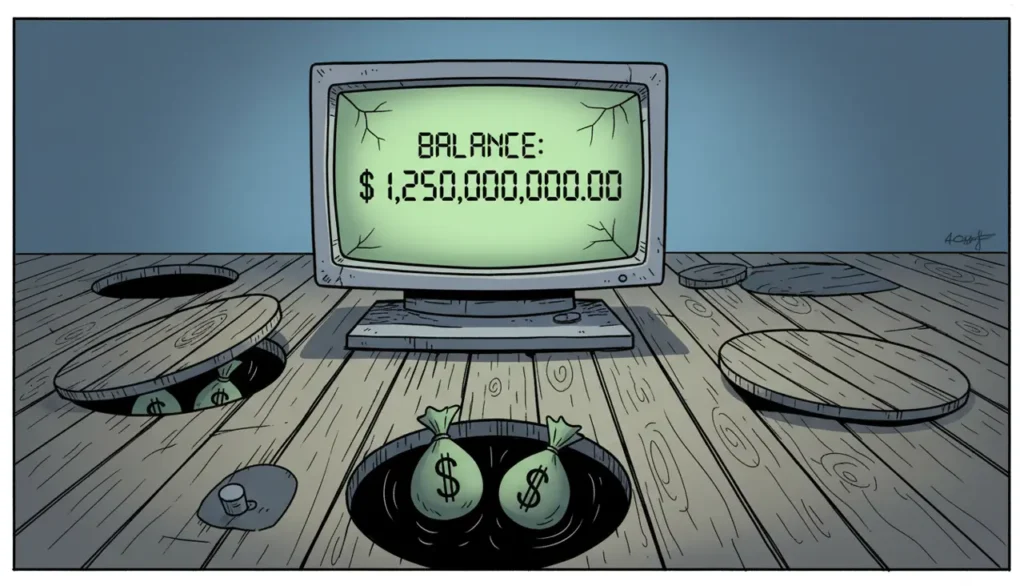
Your Bank Balance Is Lying To You: What It Does Not Show
“Sales are okay, so why does cash still feel tight?”
Many business owners look at the bank account, see money there and still feel unsure about whether they can spend it.
The bank balance itself is accurate.
The problem is using that one number as though it explains the company’s full financial position.
Why The Bank Balance Feels More Useful Than Reports
Owners are busy.
They are handling customers, staff, delivery problems, sales and supplier issues. At the end of a demanding week, they want one simple answer:
“Can we afford this or not?”
The bank balance appears to provide that answer instantly.
But it combines money with several different purposes:
- Cash needed for supplier bills.
- Payroll commitments.
- GST and tax obligations.
- Loan and financing payments.
- Customer deposits connected to future work.
- Cash required to deliver existing orders.
- Money that may be retained for future needs.
The total is real, but not all of it is necessarily available for a new decision.
What The Bank Balance Cannot Tell You
What Is Already Committed
The balance does not automatically deduct payroll, rent, suppliers, GST, tax or other upcoming payments.
What Customers Still Owe
It does not explain whether cash is low because invoices remain unpaid or were never issued promptly.
Whether The Business Is Profitable
A high balance may include loans, deposits or delayed supplier payments. A lower balance may follow a planned investment.
Whether Cash Will Arrive In Time
The balance does not show whether customer receipts will arrive before the next major payment falls due.
Where The Pressure Came From
It cannot explain whether the issue is weak margin, slow collections, high overhead or an unusual payment.
What The Owner Should Do Next
The number alone does not tell management whether to collect, delay, price, cut, invest or investigate.
Why A Healthy Balance Can Create False Confidence
A strong balance may encourage decisions such as:
- Hiring earlier than planned.
- Adding a recurring subscription.
- Increasing advertising.
- Buying equipment.
- Taking more drawings or distributions.
- Approving a purchase without reviewing upcoming commitments.
The pressure appears later when several obligations fall due close together.
The owner then wonders where the money went.
Usually, it did not disappear.
It was spent, committed, collected too slowly or needed for a purpose that was not visible from the balance alone.
Why Profit And Bank Balance Do Not Match
Profit and cash measure different things.
A company may report profit while cash remains tight because:
- Customers have not paid yet.
- Stock or materials were purchased in advance.
- Loan principal was repaid.
- Equipment was purchased.
- GST or tax was paid.
- Cash is tied up in deposits or projects.
A company may also have cash in the bank without being profitable.
This can happen because of:
- A new loan.
- Owner funding.
- Customer deposits.
- Delayed supplier payments.
- The sale of an asset.
This is why the bank balance should not be used as a substitute for the profit and loss report or balance sheet.
What To Review Before A Spending Decision
Before approving a significant or recurring expense, consider:
- Current cash across all relevant accounts.
- Customer receipts expected soon.
- Overdue invoices requiring follow-up.
- Supplier bills and payroll approaching payment.
- GST, tax, loans and other committed payments.
- Whether the expense is essential, discretionary or deferrable.
- Whether the business can carry the cost during a weaker month.
This does not require a complicated model for every small purchase.
The level of review should match the size, duration and risk of the commitment.
Use Cash, Profit And Revenue Together
CFOSg uses the CPR Compass™ to help owners understand Cash, Profit and Revenue together.
These are not rigid steps that every business must follow in the same order.
They answer different questions:
Cash
Can collections and payment timing support upcoming commitments?
Profit
Are sales leaving enough after delivery and operating costs?
Revenue
Are sales stable, useful and coming from the right customers, products or services?
The same bank-balance pressure can have different causes.
One company may have a collection problem. Another may have weak margins. Another may have added too much recurring overhead.
The action should match the cause.
Operational Checks Versus Monthly Money Day
Some cash-related tasks need attention during the month.
This may include:
- Raising invoices promptly.
- Following up overdue customers.
- Entering supplier bills.
- Reconciling bank transactions.
- Checking urgent payment commitments.
The owner can then use monthly Money Day to review the wider position.
Monthly Money Day Questions
- Did the total bank position improve or weaken?
- Which customer invoices remain overdue?
- What major payments are approaching?
- Did profit move in line with revenue?
- Which cost increased most?
- Is cash tied up in stock, projects or deposits?
- Which issue requires management attention next?
More frequent monitoring may be needed when cash is already tight or a major payment is approaching.
That does not mean the owner needs to repeat a full financial review every week.
How Xero Helps
Xero can help organise the financial information needed to understand the bank balance properly.
Useful areas may include:
- Bank feeds and reconciliation.
- Outstanding customer invoices.
- Outstanding supplier bills.
- Profit and loss reporting.
- Balance-sheet accounts.
- Bank Summary reporting.
- Tracking reports where suitable.
However, Xero cannot decide whether a new purchase, hire or distribution is sensible.
The software provides information. Management must still understand what the money is needed for and what decision the business can support.
Common Bank-Balance Mistakes
- Treating all cash as available to spend.
- Ignoring customer deposits tied to future delivery.
- Forgetting GST, tax and annual payments.
- Approving permanent costs after one strong month.
- Using unpaid invoices as though the money has arrived.
- Taking drawings without considering company commitments.
- Delaying supplier payments to preserve an artificial balance.
- Assuming a low balance always means the business is unprofitable.
Common Questions About Bank-Balance Decisions
Is the bank balance actually wrong?
Why does cash feel tight when sales are good?
Does profit equal money available to spend?
Should I use separate bank accounts?
How often should I review cash?
How do I know what is safe to spend?
The Bank Balance Is Lying To You Takeaway
The bank balance is not useless.
It is simply incomplete when used alone.
A better spending decision considers:
- What cash is available now.
- What cash is already committed.
- What still needs to be collected.
- What significant payments are approaching.
- Whether the business is producing genuine profit.
- What decision created the current pressure.
Related: Cash Flow Management Singapore • Xero Bank Summary Report • Monthly Money Day • CPR Compass™
Does Your Bank Balance Keep Creating False Comfort?
CFOSg can help review your Xero records, collections, upcoming payments and financial position so spending decisions rely on more than one bank number.
Book A 15-Minute Call See Xero ServicesQuestions Owners Usually Ask
Why does my bank balance feel misleading even when there is money in the account?
The balance shows how much cash is in that account now. It does not automatically show which amounts are already needed for payroll, suppliers, GST, tax, loans or other upcoming commitments.
Is checking my bank balance a bad habit?
No. The bank balance is useful. The problem begins when it becomes the only information used for spending, hiring, investment or owner-distribution decisions.
What should I review before making a major spending decision?
Review current cash together with expected collections, overdue invoices, supplier bills, payroll, GST, tax, loans and other planned commitments. Also consider whether the new cost is temporary or recurring.
Why can cash feel tight when the business is profitable?
Profit may be tied up in unpaid customer invoices, stock, projects or other assets. Cash may also have been used for loan principal, equipment, GST, tax or other payments that do not affect profit in the same way.
Can Xero tell me how much is safe to spend?
Xero can show bank balances, invoices, bills, reports and financial movements. It does not automatically decide what the business can afford after considering all commitments, timing and management priorities.
Should I use separate bank accounts?
Separate accounts may improve visibility and reduce accidental spending. They do not replace reliable bookkeeping, cash planning or review of the company’s actual obligations.
How often should I review cash?
Urgent collections and payment commitments should be monitored as often as the business requires. The owner can review the wider Cash, Profit and Revenue position during monthly Money Day.
What is the most practical first step?
Make sure customer invoices, supplier bills and bank reconciliation are current. Then review what is already committed, what still needs to be collected and which upcoming payment creates the greatest pressure.
Related Reads
- CPR Compass™ Understand whether the current pressure sits mainly in Cash, Profit or Revenue.
- Cash Problem Vs Profit Problem Vs Revenue Problem Use this when the business feels tight but the cause is not yet clear.
- Xero Bank Summary Report See how cash moved without relying only on the closing bank balance.
- Monthly Money Day Turn reliable financial records into a clearer monthly owner decision.