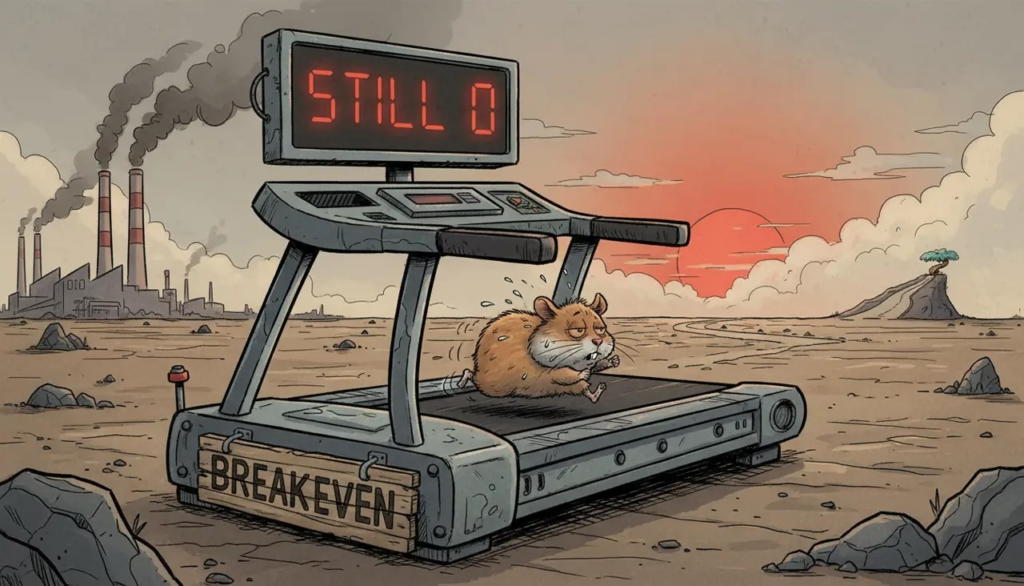
Revenue First Can Make Your Business Busier But Not Stronger
Revenue first feels productive because sales are visible.
More leads, more customers and more orders create movement. They can also create more pressure when pricing, collections, delivery costs and operating capacity are not ready.
The problem is not revenue.
The problem is treating more sales as the automatic solution to every financial issue.
Why Owners Default To Revenue First
When the business feels financially uncomfortable, selling more appears to be the clearest response.
- Cash feels tight, so the team pushes sales.
- Profit is weak, so the owner looks for more customers.
- Targets are behind, so discounts are introduced.
- The pipeline slows, so marketing spending rises.
- A difficult month creates pressure to launch something quickly.
This response is understandable.
But more revenue may amplify the original problem when the business has not identified why cash or profit is weak.
1. More Sales Can Produce Less Profit
Sales volume is not the same as profitable growth.
More revenue may bring:
- Additional materials or stock.
- More subcontractor or fulfilment costs.
- Higher commissions and payment fees.
- Overtime or temporary labour.
- More returns, rework or customer support.
- Discounts used to secure volume.
If the amount remaining after delivery costs is too small, more work can produce very little improvement in profit.
The business becomes busier without becoming financially stronger.
2. Revenue Can Rise While Cash Gets Tighter
Revenue may be recorded before the related cash reaches the bank.
The business may need to fund:
- Inventory before it is sold.
- Materials before a project claim is collected.
- Payroll before customer payment arrives.
- Marketing before results are known.
- Delivery and fulfilment before the sales cycle is complete.
This can create a gap between reported growth and available cash.
3. Weak Pricing Becomes A Larger Problem
When pricing is too low, more sales can multiply the weakness.
The same applies when:
- Discounts are used too freely.
- Scope expands without additional charges.
- Delivery costs are underestimated.
- Low-margin products dominate the sales mix.
- Customer acquisition costs are ignored.
A small pricing problem may be manageable at low volume.
At higher volume, it can consume staff time, working capital and management attention much faster.
4. Growth Can Increase Dependence On The Owner
More sales are not necessarily scalable sales.
If every new customer requires the owner to sell, approve, solve and deliver, growth may increase dependence rather than reduce it.
Warning signs include:
- The owner remains the main salesperson.
- Every exception requires owner approval.
- Delivery quality falls when volume rises.
- Staff responsibilities remain unclear.
- Customer issues increase faster than capacity.
- The business slows immediately when the owner stops pushing.
Revenue has increased, but the operating system has not grown with it.
5. One Strong Month Can Trigger Permanent Costs
A strong sales month can create confidence.
That confidence may lead to:
- New hires.
- Larger premises.
- More software subscriptions.
- Longer contracts.
- Equipment purchases.
- Higher recurring marketing commitments.
The problem appears when a temporary revenue improvement creates permanent overhead.
A slower month then has to carry the same fixed cost base.
6. Discounts Can Create A Volume Trap
Discounting can be useful when it has a clear commercial purpose.
But revenue-first thinking can turn discounts into the default response whenever sales slow.
This may:
- Reduce the amount retained from each sale.
- Train customers to wait for promotions.
- Attract customers who are less likely to return at full price.
- Increase fulfilment work without enough financial contribution.
- Force the business to sell even more just to achieve the same profit.
The promotion may increase the top line while making the underlying economics weaker.
7. Growth Can Hide Operational Problems
Rising revenue can temporarily make other problems less visible.
For example:
- Slow collections may be hidden by new customer receipts.
- Rising overhead may be covered by a strong sales month.
- Poor delivery efficiency may be masked by higher volume.
- Unprofitable customers may be hidden inside total sales growth.
- Old stock may be ignored while new stock continues to arrive.
The business appears healthy until growth slows and the underlying issues become harder to fund.
What To Review Before Chasing More Revenue
Before setting a larger sales target, review whether the current business can support the growth.
Cash Timing
Will the business need to pay suppliers, staff or fulfilment costs before collecting the related customer cash?
Margin Quality
How much remains after direct delivery costs, discounts, commissions and other variable costs?
Operating Capacity
Can the current team and process deliver more without creating excessive overtime, errors or owner dependence?
Customer Quality
Are the new customers profitable, suitable and likely to pay on time?
Fixed-Cost Risk
Will growth require permanent overhead that remains even if sales weaken later?
Collection Ability
Can the business invoice promptly and collect the additional revenue reliably?
A Better Growth Question
Instead of asking only:
“How do we increase revenue?”
Ask:
- Which sales create the strongest financial contribution?
- Which customers pay reliably?
- Which products or services are easiest to deliver well?
- Which revenue requires too much working capital?
- Which sales depend on heavy discounting?
- What additional overhead would growth require?
- Can the current team support the volume?
This shifts the focus from more sales to better growth.
Use Cash, Profit And Revenue Together
Cash, Profit and Revenue should not be treated as three rigid stages that must always be reviewed in exactly the same order.
They explain different parts of the same business.
Cash
Shows whether collections and payment timing can support current commitments.
Profit
Shows whether revenue is leaving enough after delivery and operating costs.
Revenue
Shows where sales are coming from and whether the sales base is stable and useful.
CFOSg brings these areas together through the CPR Compass™.
The purpose is to identify whether the current pressure is mainly coming from cash timing, weak profit or the quality and stability of revenue.
Do Not Use A Single Revenue Formula Blindly
Revenue targets can be useful, but no single formula captures every business situation.
A meaningful target may need to consider:
- Direct delivery costs.
- Operating expenses.
- Owner remuneration.
- Tax and debt commitments.
- Planned investment.
- Required financial margin.
- Seasonality and collection timing.
The target should also reflect whether the business has the capacity and working cash to deliver that level of sales.
What To Review During Monthly Money Day
Monthly Money Day gives the owner a regular opportunity to test whether growth is helping.
Cash
- Did customer collections improve or weaken?
- What major payments are approaching?
- Is additional growth tying up more cash?
Profit
- Did gross profit move in line with sales?
- Did discounts or delivery costs increase?
- Did operating expenses grow faster than the business?
Revenue
- Which customers, products or services produced the growth?
- Was the growth dependent on promotions?
- Can the business deliver this sales level consistently?
The review should help management decide whether to keep growing, improve the economics first or strengthen the delivery system.
When More Revenue Is The Right Answer
More sales can be exactly what the business needs when:
- Pricing and margins are healthy.
- Customers pay within workable terms.
- The team has available capacity.
- Delivery processes are reliable.
- Additional sales do not require excessive upfront cash.
- The business understands which offers and customers are profitable.
The lesson is not to avoid growth.
It is to make sure the business can benefit from the growth it creates.
Common Questions About Revenue-First Growth
Is focusing on revenue a bad strategy?
Can more sales make cash flow worse?
Should I stop offering discounts?
How do I know whether growth is profitable?
Should cash always be reviewed before revenue?
What should I fix before increasing sales?
The Revenue First Takeaway
Revenue is necessary, but it should not be used as the automatic answer to every cash or profit problem.
Before chasing more sales, understand:
- How quickly customers pay.
- How much remains after delivery costs.
- Whether the current team can handle the work.
- Whether growth requires more fixed overhead.
- Which customers and offers produce useful revenue.
The goal is not to slow the business down.
It is to stop the business from scaling work faster than it scales financial strength.
Related: CPR Compass™ • Cash Flow Management Singapore • Profit Allocation System • Monthly Money Day
Are Higher Sales Creating More Work But Not More Profit?
CFOSg can help review whether the issue sits in collections, margins, operating costs, pricing or the quality of your revenue.
Book A 15-Minute Call See Xero Services