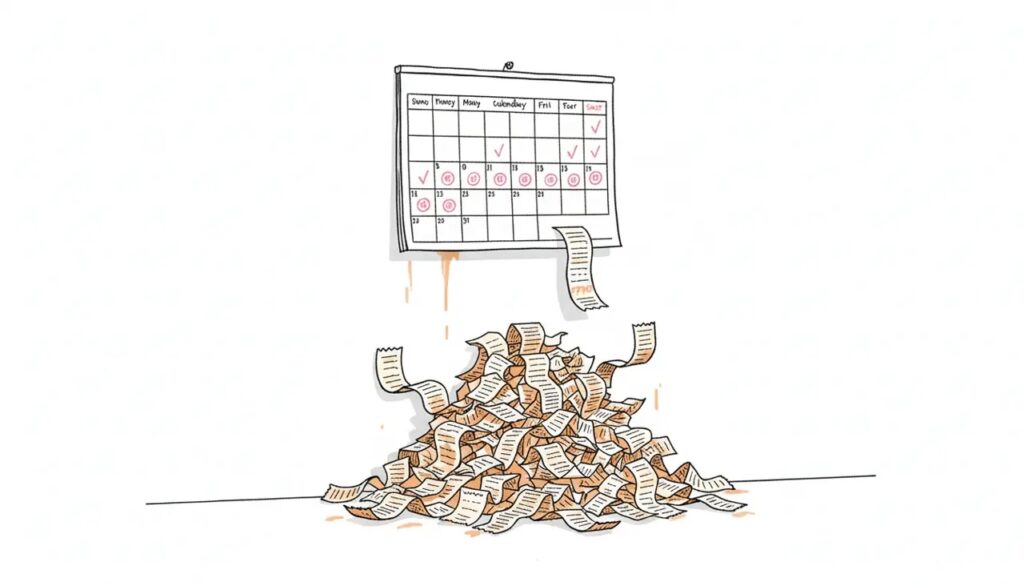
Money Day: A Simple Monthly Money Review For Business Owners
Most business money problems do not begin as major emergencies.
They usually begin as smaller issues that remain unnoticed: customer invoices take longer to collect, costs increase, spending commitments accumulate or profit weakens while sales still look healthy.
Money Day gives the owner one regular time each month to stop, review the financial position and decide what needs attention next.
Why Business Owners Need A Regular Money Review
During a busy month, financial decisions are often made one at a time.
An expense appears urgent. A customer payment is delayed. A new subscription looks affordable. A promotion appears necessary because sales are slower than expected.
Each decision may seem reasonable in isolation.
The problem appears when nobody reviews what all those decisions are doing to the business together.
Without a regular review:
- The owner may rely too heavily on the current bank balance.
- Overdue invoices may remain uncollected.
- Operating expenses may increase quietly.
- Profit may weaken without a clear explanation.
- Upcoming payments may create avoidable stress.
- Reports may be received but never used.
What Should Happen Before Money Day
Money Day works only when the underlying records are current enough to review.
Operational accounting work should happen throughout the month.
This may include:
- Raising customer invoices.
- Entering supplier bills.
- Following up overdue accounts.
- Reconciling bank transactions.
- Recording payroll and major expenses.
- Investigating missing or unusual entries.
The owner does not need to complete all these tasks personally.
But the owner should know whether the records are ready before using them to make a decision.
The Three Money Day Areas
Cash
Review what is available, what is already committed and what still needs to be collected.
Profit
Review whether sales are leaving enough after delivery costs and operating expenses.
Revenue
Review whether sales are stable, useful and coming from the right customers, products or services.
1. Review Cash
The current bank balance is only the starting point.
Money Day should also consider:
- Overdue customer invoices.
- Expected collections.
- Supplier bills approaching payment.
- Payroll commitments.
- GST, tax and loan payments.
- Large planned purchases.
- Cash tied up in stock, projects or deposits.
The useful question is not only, “How much money is in the bank?”
It is, “What will remain after the next important commitments are paid?”
2. Review Profit
Sales can rise while profit remains flat or falls.
During Money Day, review whether:
- Direct delivery costs increased.
- Gross profit weakened.
- Discounts affected the result.
- Operating expenses grew.
- One cost category moved unusually.
- A product or service became less profitable.
- Reported profit matches the owner’s experience of cash.
Do not respond automatically by cutting every expense.
First identify which movement is creating the pressure and whether it can be changed without damaging the business.
3. Review Revenue
Revenue review should go beyond total monthly sales.
Consider:
- Whether sales improved or weakened.
- Which products or services produced the result.
- Which customers contributed most.
- Whether sales depended on discounting.
- Whether the sales pipeline is stable.
- Whether additional sales required too much delivery cost.
- Whether the current mix supports the wider business.
More revenue is useful only when it contributes to a stronger financial position.
A Practical Money Day Review
Start With Reliable Numbers
- Are bank accounts reconciled?
- Are customer invoices and supplier bills current?
- Are payroll and major costs included?
- Are unusual balances understood?
Review The Current Position
- Did cash improve or weaken?
- Did profit move in line with sales?
- Which major cost changed?
- Which invoices require collection action?
- Which upcoming payments require planning?
Choose The Next Financial Action
- Collect an overdue account.
- Review a rising cost.
- Reconsider a discount or price.
- Delay or challenge a new commitment.
- Investigate a weak customer, product or service.
- Improve a broken financial workflow.
The action should match what the numbers actually show.
It should not be selected from a fixed formula without considering the wider business.
Money Day Should Reduce Decisions, Not Create More
A poor review creates a long list of observations and no action.
A useful review helps the owner distinguish between:
- Information that is interesting.
- Information that requires monitoring.
- Information that requires a decision now.
Not every movement needs to be fixed immediately.
Some items require more information. Others may be normal timing differences. The owner should focus on the issue with the greatest practical effect on the current business.
What Money Day Is Not
Money Day is not:
- A replacement for bookkeeping.
- A full board meeting.
- A daily bank-balance check.
- A rigid transfer formula.
- A universal spending percentage.
- A reason to react to every small variance.
- A guarantee that one action will solve every financial problem.
It is a simple monthly habit for connecting reliable numbers with owner decisions.
Why Monthly Money Day Works
A monthly review is frequent enough to identify meaningful movements without forcing the owner to analyse every normal daily change.
It also matches the rhythm of common financial information such as:
- Monthly profit and loss reporting.
- Payroll.
- Rent and recurring overhead.
- Customer and supplier ageing.
- Monthly sales patterns.
- Management forecasts.
Additional cash or operational checks may still be needed during periods of pressure.
For example, a company with delayed collections, major project payments or unstable cash may need more frequent monitoring until the issue improves.
How To Make Money Day Easier
The process is easier when the business prepares the same information consistently.
Useful habits include:
- Using one recurring calendar date.
- Agreeing who prepares the reports.
- Keeping the review questions consistent.
- Recording the decision and person responsible.
- Reviewing the previous action before selecting another one.
- Keeping supporting reports limited to what is useful.
The routine should be simple enough to repeat even during a busy month.
How Xero Supports Money Day
Xero can organise the financial information needed for the review when the records are maintained consistently.
Useful areas may include:
- Bank balances and reconciliation.
- Outstanding customer invoices.
- Outstanding supplier bills.
- Profit and loss reporting.
- Balance-sheet balances.
- Revenue and expense comparisons.
- Tracking reports where suitable.
Xero does not decide what the owner should do.
It provides the financial record. Money Day provides the habit for using it.
Common Money Day Questions
Does Money Day need to happen every week?
How long should Money Day take?
Do I need a detailed cash-flow forecast?
Should I review every expense?
What happens when several problems appear?
Can my accountant run Money Day for me?
The Money Day Takeaway
Money Day creates one regular space for the owner to step out of daily operations and review:
- Cash available and committed.
- Customer collections.
- Upcoming payments.
- Profit movements.
- Revenue quality.
- The next important financial decision.
The routine does not need to reveal every answer.
It needs to make the next important question clear enough to act on.
Related: CPR Compass™ • Cash Flow Management Singapore • Profit Allocation System • Profit-Ready by CFOSg™
Do Your Monthly Reports Lead To A Clear Decision?
CFOSg can help structure your Xero records and monthly owner review so Cash, Profit and Revenue are easier to understand.
Book A 15-Minute Call See Xero Services